If there's one day trip you absolutely have to do while you're in Phuket, it's the Phi Phi Islands. We'd heard the hype. We'd seen the photos. And honestly, we went in a little skeptical. There's no way a place that famous could actually live up to the expectations, right? Wrong. It lived up to every single one.
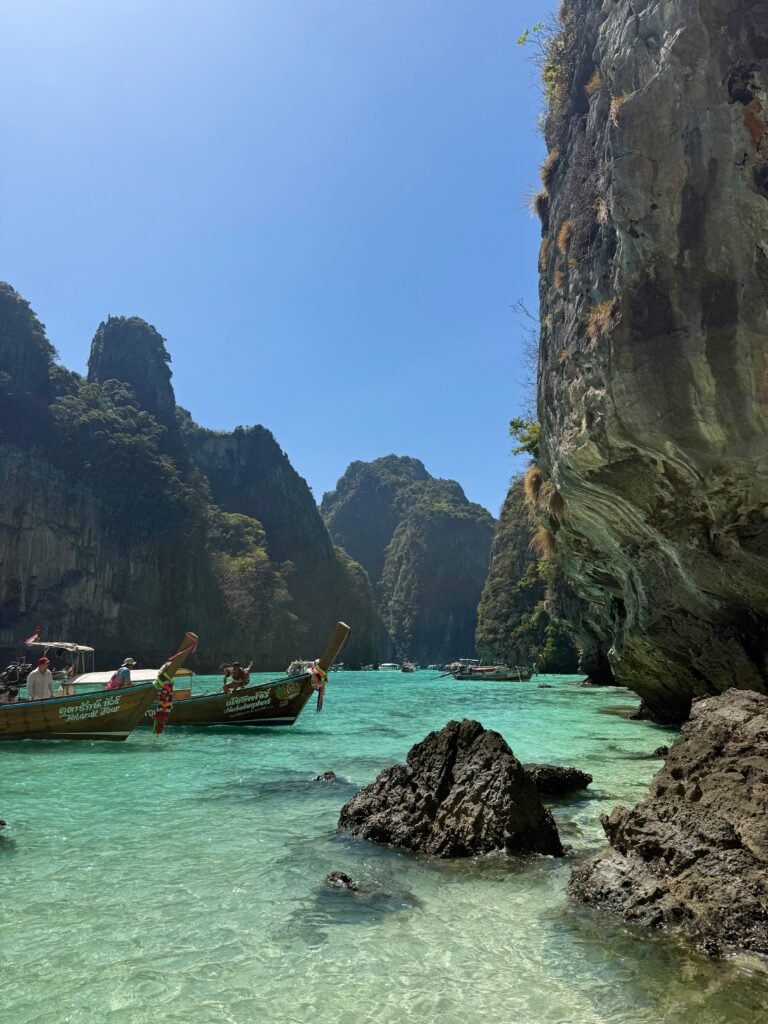
We did a full-day tour from Phuket that covered Pileh Lagoon, Viking Cave, Maya Bay, snorkeling, lunch on Phi Phi Don, and a final stop at Khai Island. It was a long day, we were exhausted by the end of it, and we'd do it all over again in a heartbeat.
Here's how the whole thing went, plus everything you need to know if you're planning the same trip.
The Morning: Pickup and Getting to the Pier
The day started early. Our hotel pickup was around 7:15 AM, which felt brutal at the time but turned out to be a blessing. The earlier you get out there, the fewer crowds you deal with at the stops.
After pickup, we were driven to the pier where the tour operator had coffee, tea, juice, and some light snacks waiting. It was a nice touch. We had a short safety briefing, got our snorkeling gear, life jackets, and boarded the speedboat.
The ride from Phuket to the Phi Phi Islands takes roughly 45 to 50 minutes by speedboat. The boat was fast and the ride was bumpy in places, but the scenery on the way out was stunning. Limestone cliffs rising out of the water, shades of blue we didn't know existed. That's when it hit us. This was going to be a good day.
One heads-up. If you get motion sick easily, take something before you board. The speedboat bounces, especially in choppier conditions. A catamaran tour is a smoother alternative, but it takes longer to get there.
Stop 1: Pileh Lagoon
Our first stop was Pileh Lagoon, and what a way to start the day.
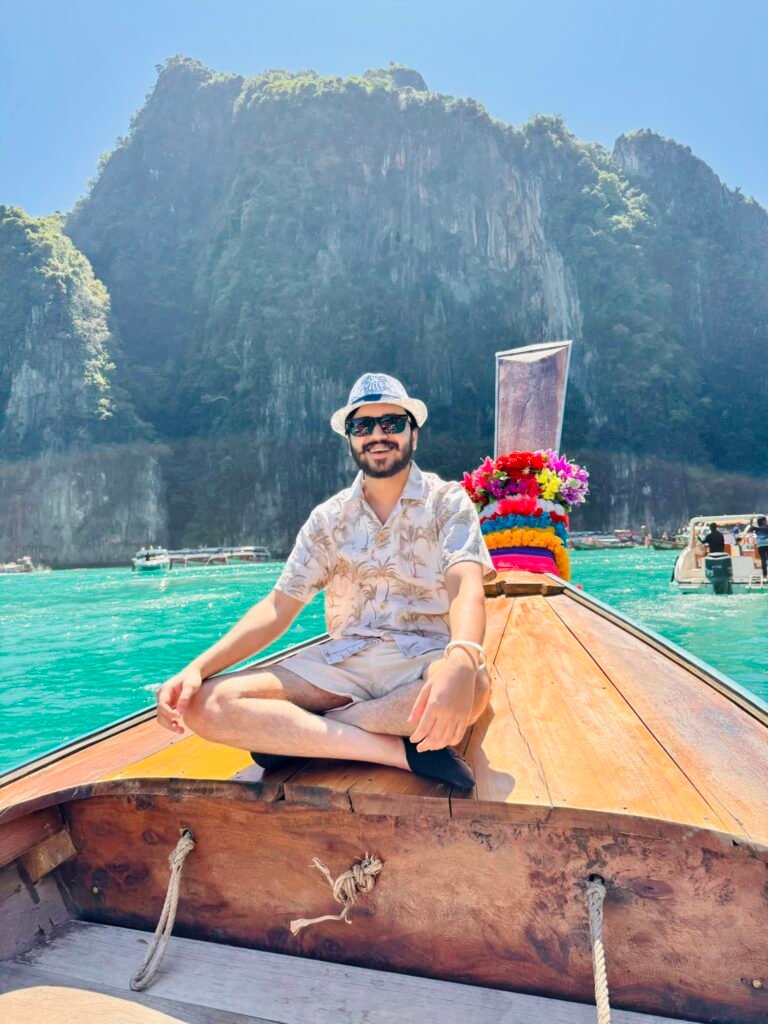
Pileh Lagoon is a sheltered cove on Phi Phi Leh, surrounded on all sides by sheer limestone cliffs. The boat enters through a narrow gap in the rock and suddenly you're floating in this impossibly clear, emerald-green water with cliffs towering all around you. It feels like you've entered another world. We genuinely gasped when the boat turned the corner and the lagoon opened up in front of us.
This is where you swim. And it's incredible.
The water is deep in the middle of the lagoon, so there's not a ton of coral to see while snorkeling, but the visibility is ridiculous and the sheer beauty of the place more than makes up for it. Some people said they spotted parrotfish and even blacktip reef sharks around the edges near the cliff walls.
We just floated. That's it. Jumped off the boat, put on our masks, and floated in the middle of this lagoon surrounded by cliffs while the water shifted between shades of green and turquoise depending on where the sun hit it. It was easily one of the most stunning natural spots we've ever been in.
Most group tours give you about 20 to 30 minutes here, which honestly feels too short. If you ever get the chance to do a private longtail boat trip from Phi Phi Don instead, you can linger longer. But even 20 minutes in Pileh Lagoon is worth the entire trip. The morning light hitting those cliff walls while you float in water that looks photoshopped? That's a core memory right there.
Stop 2: Viking Cave
From Pileh Lagoon, we headed along the cliffs of Phi Phi Leh to Viking Cave. This one is a quick stop, maybe 15 minutes, and it's a boat-only viewing. You don't actually go inside.
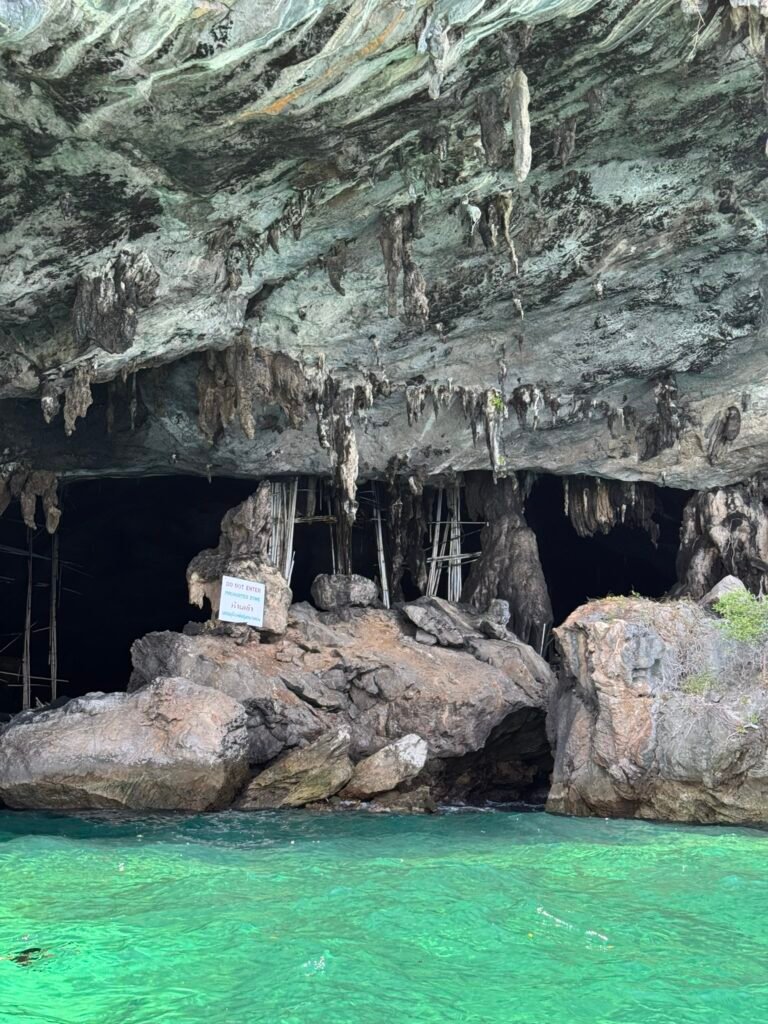
Viking Cave is a large sea cave known for two things: ancient wall paintings that are said to resemble Viking ships (hence the name), and the bird's nests that are harvested from inside the cave. These are the swiftlet nests used to make bird's nest soup, and they're incredibly valuable. The cave is off-limits to tourists to protect both the paintings and the harvesting operation.
Your boat pulls up close enough to see the entrance, the cliff face, and the bamboo scaffolding the harvesters use to climb up to the nests. The guide explains the history, you snap some photos from the water, and you move on. It's brief but interesting, and the cliffs themselves are impressive. Not a headline stop, but a cool piece of the day.
Stop 3: Maya Bay
This is the one everyone comes for. Maya Bay is the cove on Phi Phi Leh that was made famous by the Leonardo DiCaprio movie The Beach. And when you see it in person, you understand why they chose it. Towering limestone cliffs wrap around a crescent of white sand with water so clear it barely looks real.
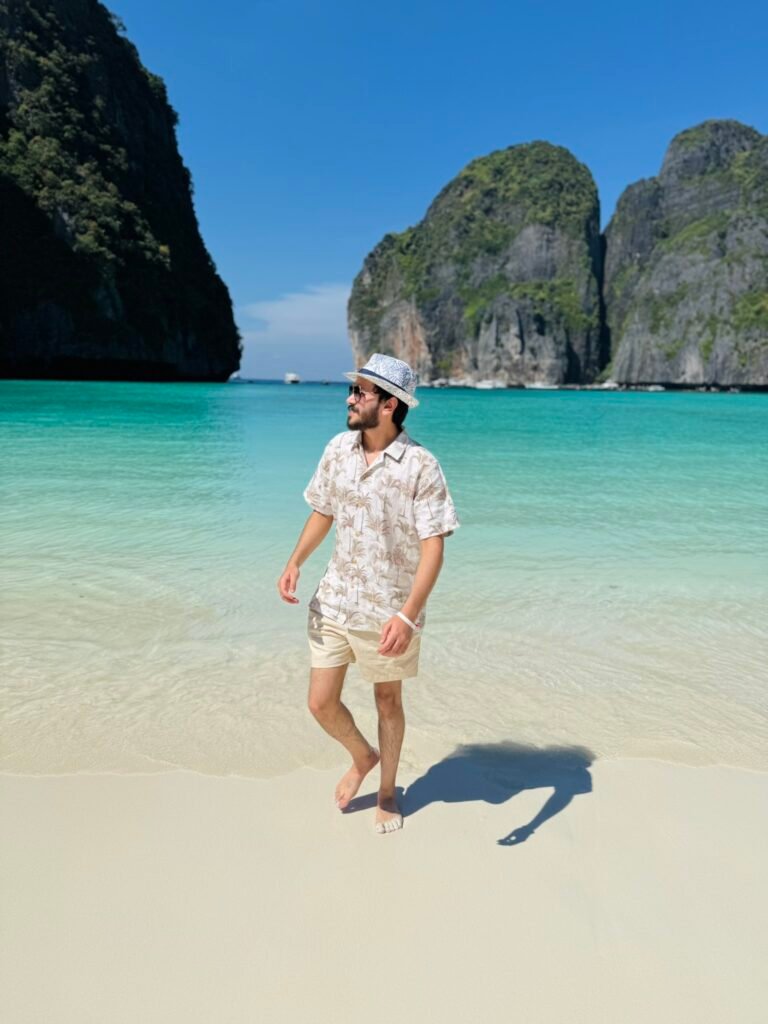
Here's what you need to know though. Maya Bay is not what most people expect it to be.
After being destroyed by overtourism, the bay was closed for nearly four years starting in 2018 so the ecosystem could recover. It reopened in 2022, but with strict new rules. Boats no longer pull up onto the beach. Instead, you dock at Loh Samah Bay on the back of the island and walk a boardwalk through the jungle for about 5 to 10 minutes before it opens up dramatically onto the bay.
And the big one: you cannot swim. Swimming has been banned to protect the recovering coral reef and the baby blacktip reef sharks that now breed in the shallows. You can wade in up to your knees, but that's it. Rangers are watching, and they will whistle at you if you go further.
Visitor numbers are also capped at around 300 people at a time, with hourly time slots. So you get roughly an hour on the sand before your group moves on.
We know that sounds restrictive. But honestly? It makes the experience better. The beach is clean. The water is pristine. There were actual baby sharks swimming right there in the shallows. It felt like we were seeing Maya Bay the way it was supposed to look, not the overcrowded version from all those old photos. Take it in, take your photos, appreciate the fact that this place got a second chance, and move on to the next stop where you can actually get in the water.
One more thing. Maya Bay closes every year from August through September for environmental recovery. If you're traveling during that window, your tour will still run but will substitute other stops. Check dates before you book.
Stop 4: Snorkeling
After Maya Bay, we headed to a snorkeling spot that the guide chose based on conditions that day. The exact location can vary, but ours was at a reef area near Phi Phi Leh with good coral coverage and calm water.
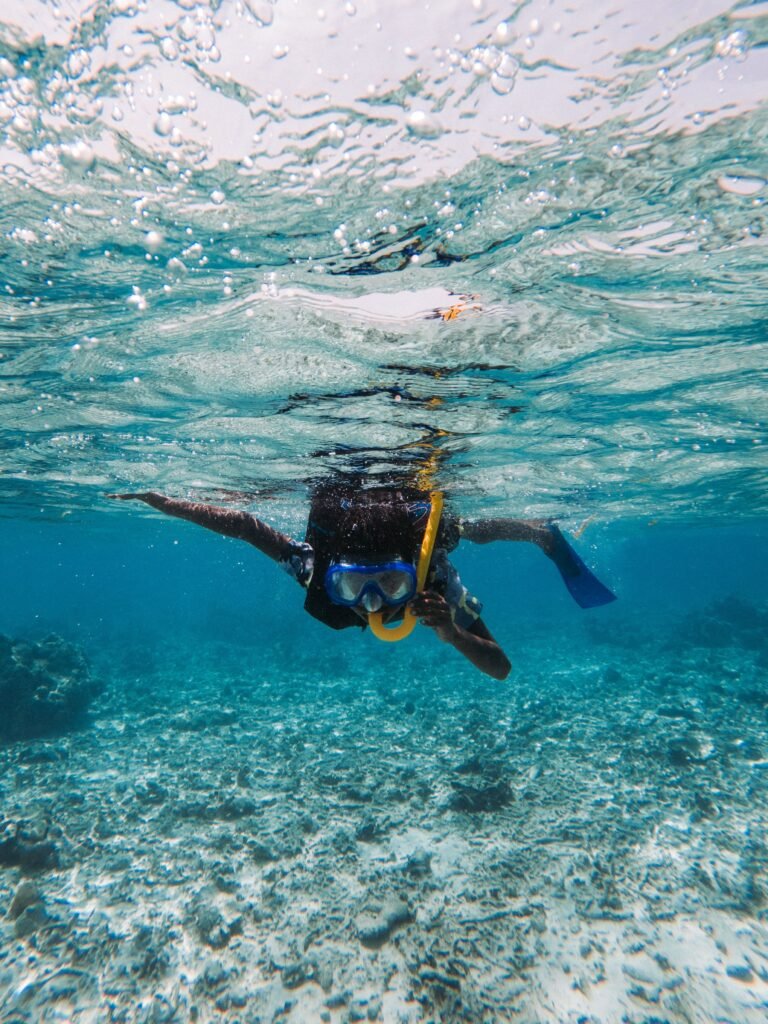
The snorkeling was great. Visibility was good, the water was warm, and we saw plenty of colorful fish, coral formations, and even a few sea urchins clinging to the rocks. Snorkel gear was provided, and it was decent quality.
We're not expert snorkelers by any stretch, but we didn't need to be. The water was calm, the guides pointed out where to go, and it was one of those effortless experiences where you just stick your face in the water and suddenly you're in a different world.
If snorkeling is a big priority for you, consider booking a tour that specifically emphasizes it, as some standard day trips only give you 15 to 20 minutes at each snorkeling stop. We would've liked more time, but there's a lot to fit into one day.
Stop 5: Lunch and Exploring Phi Phi Don
By early afternoon, we pulled into Phi Phi Don, which is the only inhabited island in the Phi Phi archipelago, and the one where all the restaurants, shops, and accommodation are.
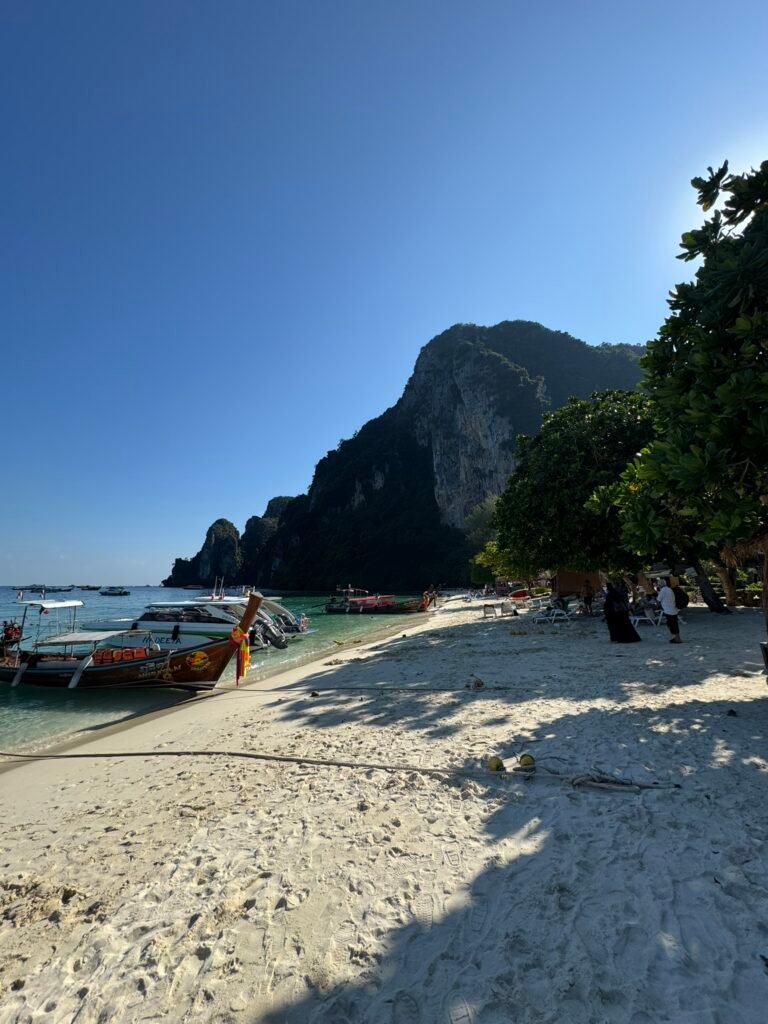
Lunch was a Thai buffet served at a beachside restaurant. We had curries, pad thai, stir fry, rice, fresh fruit, and some other dishes. It was solid. Not life-changing, but definitely good, and after a morning of sun, salt water, and swimming, we were hungry enough to go back for seconds.
After eating, we explored the island. Phi Phi Don has this great backpacker energy. The narrow walking streets are packed with little souvenir shops, dive shops, smoothie stalls, and restaurants. We wandered around, grabbed a fresh fruit shake from one of the stalls near the pier, and just soaked in the atmosphere. It feels like its own little world, separate from everything else.
If you've got the energy, you can walk further from the main tourist strip and find some quieter beaches. There's also Monkey Beach on the western side of Phi Phi Don, a small stretch of sand where wild crab-eating macaque monkeys hang out along the shoreline and in the trees. Some tours make a separate boat stop here. Either way, the monkeys aren't shy. They're used to visitors and will wander right down to the waterline. Just don't feed them and don't try to get too close for a selfie. They're wild animals and they can bite. Watching them do their thing from a respectful distance is entertaining enough.
We spent about two hours on Phi Phi Don total. It was the perfect mid-day break. Eat, explore, recharge, and get ready for the final stop.
Stop 6: Khai Island
The last stop of the day was Khai Island, a tiny little island with white sand, shallow turquoise water, and not much else. And that's exactly the point.
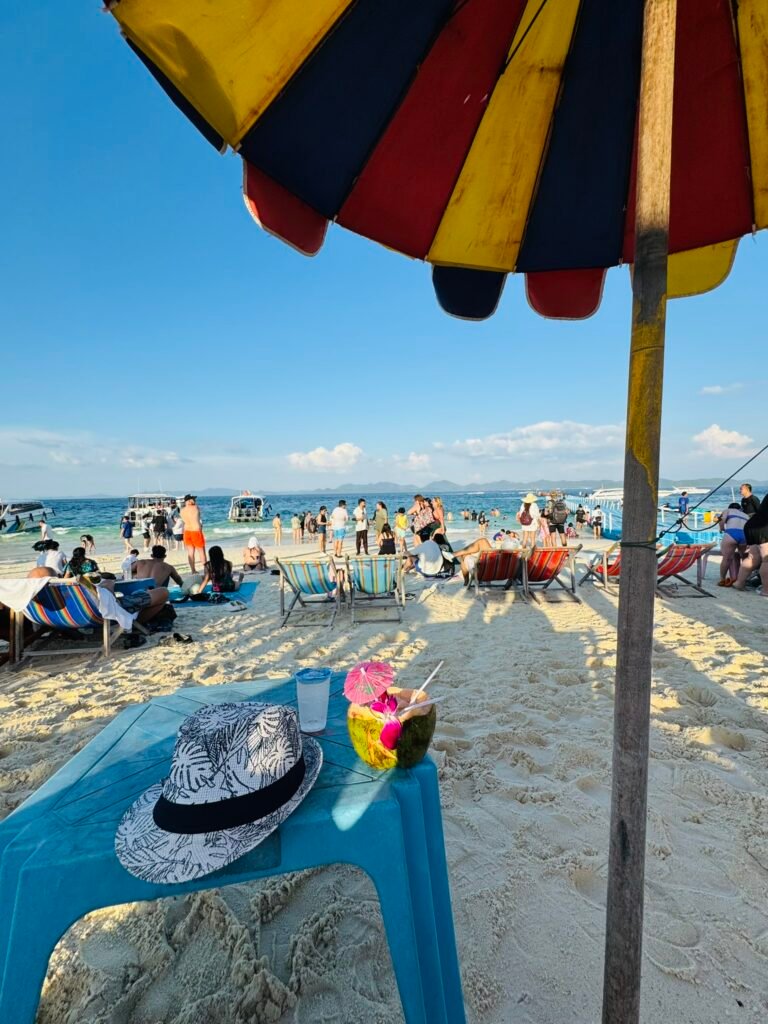
After a full day of bouncing from spot to spot, Khai Island was the perfect wind-down. We swam in the shallows, laid on the beach, and just decompressed. The water was warm and incredibly clear, with fish swimming right up to the shore.
It's a small island, so there's not a ton to do beyond swimming, snorkeling, and relaxing. But by that point in the day, relaxing was exactly what we needed. Some tours stop at Bamboo Island instead, which is bigger and a bit more secluded. Both are beautiful.
By late afternoon, we were back on the speedboat heading to Phuket, arriving at the pier around 5 PM. The driver was waiting to take us back to the hotel, and we collapsed into bed feeling sunburned, salty, and completely satisfied.
Practical Stuff You Need to Know
Tour types: Speedboat is the most common and gets you there fastest (about 45 to 50 minutes). Catamaran is smoother and more comfortable but takes longer. Ferry is the cheapest option but turns the trip into a much longer day and covers fewer stops. We'd recommend speedboat for a day trip.
Tour cost: Standard group tours are advertised anywhere from about 1,200 to 3,000 THB per person depending on the operator, boat type, and what's included. That said, prices in Thailand are almost always negotiable, especially if you book in person at a tour stand rather than online. We ended up paying 1,300 THB per person for our Phi Phi and Khai Island speedboat tour with the national park fee included, so don't be afraid to haggle a bit. Private charters cost significantly more but give you full control over the itinerary and timing.
National park fee: 400 THB per adult, 200 THB per child. Some tours include this in the price (ours did) and some tack it on at the pier. Always confirm before you hand over any money — an "included" fee is worth roughly 400 THB of negotiating power on its own.
What's usually included: Hotel pickup and drop-off (from Patong, Kata, Karon, and Phuket Town areas), snorkeling gear, life jackets, buffet lunch, soft drinks, fruit, and an English-speaking guide.
What to bring: Reef-safe sunscreen (regular sunscreen with oxybenzone is banned at Maya Bay), a waterproof phone pouch, a towel, a change of clothes, a waterproof bag for valuables, sunglasses, and cash for any extras at the stops.
What not to bring: Drones (banned in the national park), anything you don't want to get wet, and heavy expectations about swimming at Maya Bay (remember, it's a no-swim zone now).
Best time to go: November to April is dry season with calm seas and the best visibility. May to October is monsoon season with choppier water and occasional rain, though tours still run. Maya Bay closes August through September.
Motion sickness: The speedboat ride can be rough. If you're prone to seasickness, take medication before you board. Sit near the back of the boat where the ride is slightly smoother. And don't stare at your phone during the ride.
Book an early departure. Seriously. The tours that leave earlier in the morning reach the islands before the bigger boats arrive from the mainland. The difference in crowd levels is massive.
Was It Worth It?
Without question. The Phi Phi Island day trip was the highlight of our entire Phuket trip. And we're not saying that lightly. We did a lot of things in Phuket that were incredible. But floating in Pileh Lagoon surrounded by limestone cliffs, standing on the sand at Maya Bay, watching baby sharks swim in crystal-clear water, snorkeling over coral reefs, eating lunch on a beach, it all adds up to one of those days you don't forget.
Is it a long day? Yes. Will you be tired? Absolutely. Is it touristy? Of course it is. But the beauty of the Phi Phi Islands cuts right through all of that. When you're floating in that water, surrounded by those cliffs, none of the logistics matter anymore.
Book it. Get there early. Wear your sunscreen. And bring a waterproof case for your phone, because you're going to want every single photo.